
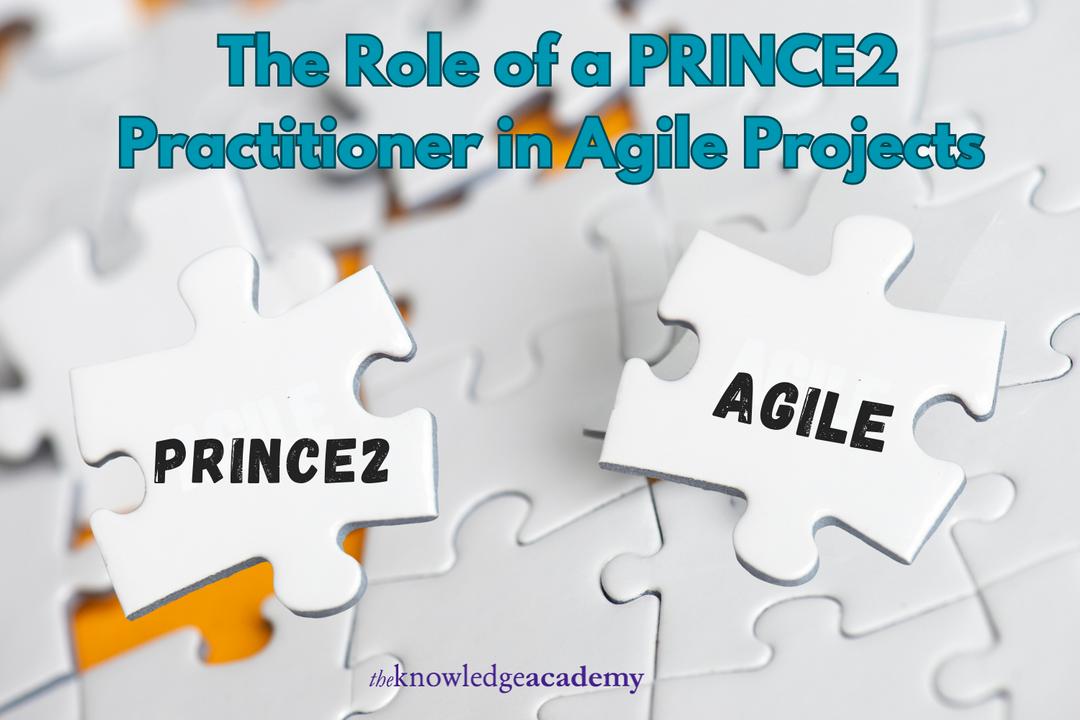
Especially when combining several approaches, negotiating the field of project management might feel like arranging a sophisticated symphony. Should you be a Prince2 practitioner exploring Agile territory, you could find it difficult to balance these methods. The PRINCE2 Agile Foundation and Practitioner Course will help you combine Agile flexibility with formal governance from PRINCE2.
This blog post talks about the important role of a PRINCE2 Practitioner in Agile projects and how to combine organised processes with iterative development so that the project is delivered successfully. Let’s see how these approaches might jointly produce a masterpiece.
Table of Contents
- Understanding the PRINCE2 Practitioner Toolbox
- Agile: The New Rhythm
- Harmonising PRINCE2 with Agile
- Roles and Responsibilities: The PRINCE2 Practitioner New Hat
- Processes: Syncing Sprints with Stages
- Conclusion: A Harmonious Collaboration
Understanding the PRINCE2 Practitioner Toolbox
Let us first start by dissecting the value a PRINCE2 practitioner offers. One solid project management tool is PRINCE2 (Projects IN Controlled Environments). It favours documentation and is methodically meticulous. Being a PRINCE2 practitioner means that your focus is on procedures, phases, and completing projects that satisfy deadlines and all the criteria for quality, scope, and cost.
You’ve got your:
- Principles: Universal best practices.
- Themes: Aspects of project management that must be addressed continuously.
- Processes: Steps that guide you from start to finish.
- Tailoring: Adapting PRINCE2 to suit the project environment.
Now, let’s see how you can jam with Agile without missing a beat.
Agile: The New Rhythm
On the other hand, Agile is like jazz: it needs to be able to change and respond and keep improving. The Agile manifesto emphasises:
- Individuals and interactions over processes and tools.
- Working software over comprehensive documentation.
- Customer collaboration over contract negotiation.
- Responding to change over following a plan.
It’s all about quick iterations, customer feedback, and being able to pivot on a dime.
Harmonising PRINCE2 with Agile
Combining Agile with PRINCE2 is not about imposing one upon the other. It is about combining their assets. Here is how you create lovely music together:
Adapting Governance
The Agile flexibility might be complemented by PRINCE2 established governance. Being a PRINCE2 practitioner guarantees that, in an Agile context as well, there is a defined project direction, roles, and responsibilities. The project board, still existing, is different. They offer high-level direction without policing the Agile teams.
Embracing Agile Principles
PRINCE2 enjoys its documentation, but you may adapt Agile by emphasising what is absolutely necessary. Agile just prioritises working software; it does not toss documentation aside. Being a PRINCE2 practitioner guarantees that documentation is lean and practical, therefore capturing lessons learnt and guaranteeing compliance without dragging the team down.
Roles and Responsibilities: The PRINCE2 Practitioner New Hat
The Project Manager
The PRINCE2 project manager in an Agile project performs more of a servant-leader role. You are there to clear roadblocks, improve team communication, and ensure the team has what it needs to be successful. More of a conductor than a commander, you guide the flow without specifying every note.
The Team
Agile allows the development team to organise themselves. Being a PRINCE2 practitioner allows you to believe in their knowledge and let them take responsibility. You offer the structure and the objectives; the team decides how to achieve them. This stimulates efficiency and creativity.
Stakeholder Engagement
Agile projects live on constant feedback. As a PRINCE2 practitioner, you guarantee that stakeholders’ involvement is proactive and continuous. Regular updates, demos, and evaluations help keep project participants in the loop and their comments included in the work.
Processes: Syncing Sprints with Stages
Initiating the Project
Starting up and starting the project are the first steps in PRINCE2, which is like Agile planning phase. Here, you define the project goals, set the vision, and ensure the business case exists. Even with Agile, this fundamental work is vital to keeping everyone in line.
Delivery Phases
Projects presented in PRINCE2 are broken down into phases. In Agile, work is done in sprints. The key is you may divide PRINCE2 phases into several Agile sprints. Every sprint offers a possibly shippable product increment; at the end of every stage, you have a review point to reevaluate the business case, risks, and project strategy.
Managing Product Delivery
This PRINCE2 mechanism guarantees that the deliverables—products—are produced and delivered according to the plan. In Agile, the development team and Scrum Master really shine. As a PRINCE2 practitioner, you ensure that preserving quality and providing value coexist.
Conclusion: A Harmonious Collaboration
Ultimately, the function of a PRINCE2 practitioner in Agile projects is not to advocate one technique over another. It’s about combining Agile iterative character with the framework and oversight of PRINCE2. It’s like writing a symphony in which every instrument and note contributes to produce a masterwork.
Therefore, keep the rhythm flowing naturally, motivate your team, and remember that the objective of managing a project like a classical pianist or a jazz virtuoso is to provide value. Now go create some lovely project music; PRINCE2 and Agile offer the best of both worlds.